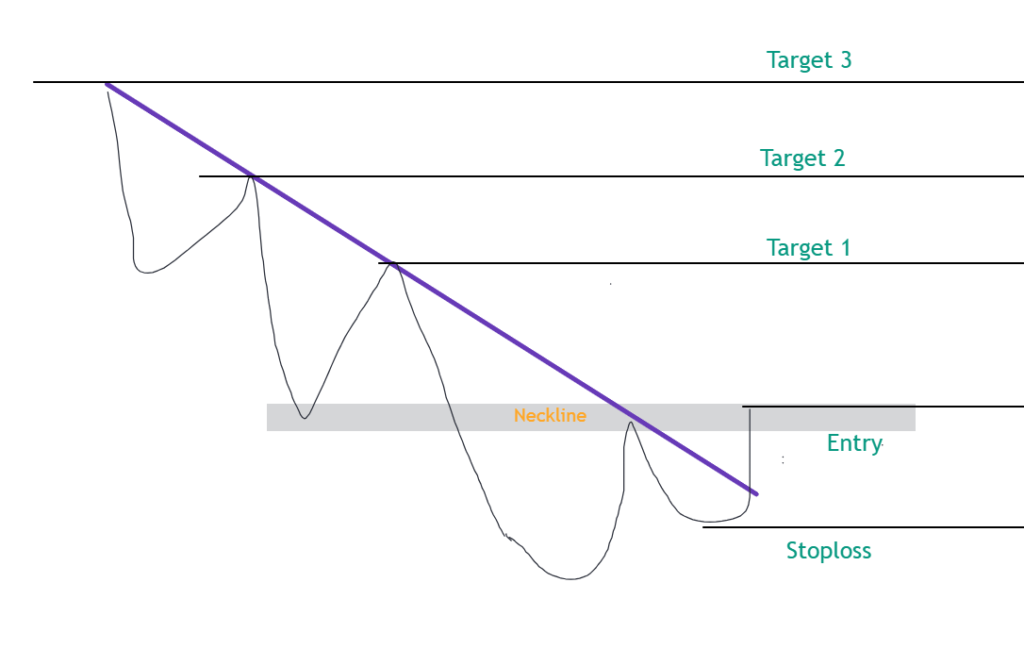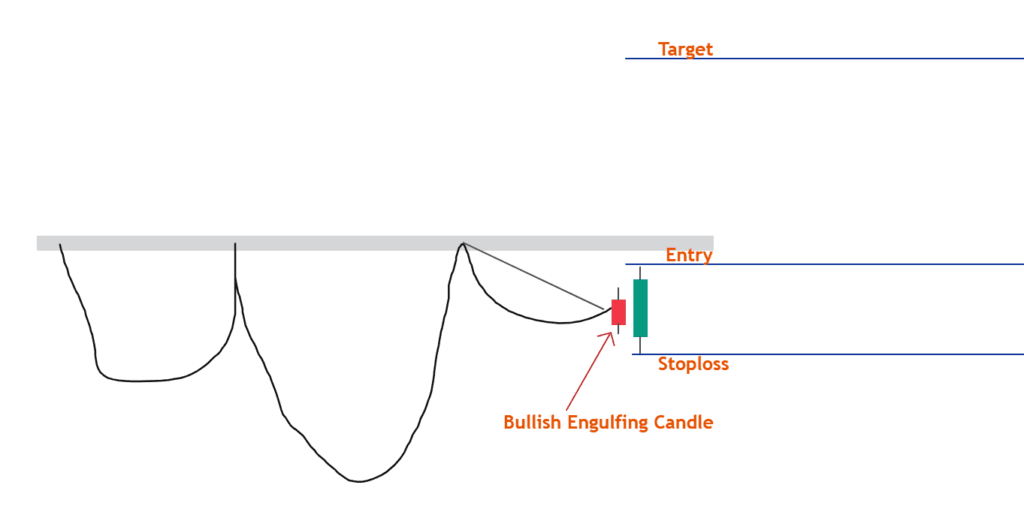
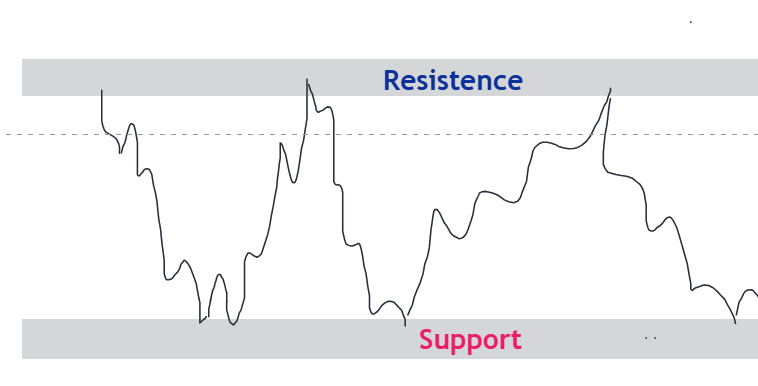
Support and Resistance are among the most important concepts in technical analysis. Whether you are a beginner or an experienced trader, understanding these levels can help you identify high-probability entry points, manage risk, and improve your overall trading decisions.
In this guide, we will explore what support and resistance are, why they matter, and how traders can use them effectively in real market conditions.
What Is Support?
Support is a price level where buying interest tends to increase, preventing the price from falling further. When the market reaches a support level, buyers often step in, creating demand and causing the price to bounce upward.
Think of support as a floor beneath the market. While the floor may not hold forever, it often slows down or temporarily stops a decline.
Characteristics of Support
Acts as a potential buying zone
Forms after repeated price reactions
Indicates strong buyer interest
Can become resistant after a breakdown
What Is Resistance?
Resistance is a price level where selling pressure tends to increase, preventing the price from moving higher. When the market approaches resistance, sellers often enter the market, causing the price to reverse or consolidate.
Resistance can be viewed as a ceiling above the market that limits upward movement.
Characteristics of Resistance
Acts as a potential selling zone
Forms after multiple price rejections
Indicates strong seller interest
Can become support after a breakout
Why Support and Resistance Matter
Support and resistance levels represent areas where buyers and sellers have previously made important decisions. These levels often attract market participants because they reveal valuable information about supply and demand.
Psychology Behind Support and Resistance
Why traders remember certain price levels
Fear and greed
Institutional buying and selling
Market memory
Retail trader behavior
Support and resistance exist because financial markets are driven by human emotions.
When traders see a price reverse multiple times from a level, they begin to expect the same reaction in the future. This collective behavior creates self-fulfilling price zones.
Fear
If traders bought near resistance and the price falls, they may sell when the price revisits that level to avoid losses.
Greed
When the price approaches support, traders anticipate a bounce and enter buy positions.
Market Memory
The market remembers important levels because large numbers of traders react to them. Institutional traders also monitor these areas, making them even more significant.
Understanding this psychology helps traders appreciate why support and resistance continue to work across different markets and timeframes.
How to Identify Support and Resistance
1. Previous Swing Highs and Lows
One of the simplest methods is to look at previous highs and lows on the chart.
Swing lows often become support.
Swing highs often become resistance.
The more times a level is respected, the stronger it becomes.
2. Round Numbers
Traders naturally focus on round numbers such as:
100
500
1000
20,000
These levels often attract significant buying and selling activity.
3. Trendlines
Trendlines can act as dynamic support and resistance.
In an uptrend:
The trendline often acts as support.
In a downtrend:
The trendline often acts as resistance.
4. Moving Averages
Popular moving averages, such as the 50- and 200-day, frequently act as dynamic support and resistance levels.
Traders can also use charting platforms such as TradingView to identify support and resistance levels more accurately.
Types of Support and Resistance
1. Horizontal Support and Resistance
These are the most common support and resistance levels. They form when the market repeatedly reacts to a specific price area. A horizontal support level is created when price bounces multiple times from the same low, while horizontal resistance forms when price repeatedly fails to move above a certain high.
The more times the market respects a level, the more significant it becomes. Traders often use these levels to identify potential entry and exit opportunities.
2. Dynamic Support and Resistance
Unlike horizontal levels, dynamic support and resistance move with price. Indicators such as moving averages and trendlines create dynamic levels.
For example, during a strong uptrend, the 50-day moving average may act as support. As the moving average rises, the support level also rises.
3. Psychological Support and Resistance
Round numbers often act as support and resistance because traders naturally focus on them.
Examples:
100
500
1,000
10,000
Many buy and sell orders are placed around these levels, increasing their importance.
4. Fibonacci Support and Resistance
Fibonacci retracement levels are widely used to identify potential reversal zones. Popular levels include:
38.2%
50%
61.8%
These levels often align with existing support and resistance zones.
5. Moving Average Support and Resistance
Moving averages are among the most widely used tools in technical analysis. Besides helping traders identify trends, they often act as dynamic support and resistance levels.
Unlike horizontal support and resistance, which remain fixed at specific price levels, moving averages change continuously as new price data is added. This is why they are called dynamic support and resistance.
In an uptrend, the price frequently pulls back toward a moving average before continuing higher. During these pullbacks, the moving average can act as a support zone where buyers re-enter the market.
For example, if a stock is trading above its 50-day Moving Average, traders may look for buying opportunities when the price retraces toward the moving average and shows signs of strength.
Similarly, in a downtrend, moving averages can act as resistance. When the price rallies toward a falling moving average, sellers may use that area to enter short positions or exit long positions.
Common Moving Averages Used by Traders
20-Day Moving Average – Popular for short-term trading.
50-Day Moving Average – Widely used to identify medium-term trends.
100-Day Moving Average – Helps track longer-term market direction.
200-Day Moving Average – One of the most important indicators used by institutional and retail traders.
Why Moving Averages Work as Support and Resistance
Moving averages are closely watched by market participants worldwide. Because many traders place buy and sell orders around these levels, they often become self-fulfilling support and resistance zones.
Example
Imagine a stock is in a strong uptrend and consistently remains above its 50-day Moving Average.
Price rises from ₹100 to ₹130.
A temporary pullback occurs.
Price declines toward the 50-day Moving Average near ₹120.
Buyers enter the market.
The stock resumes its upward trend.
In this case, the 50-day Moving Average acted as dynamic support.
Likewise, during a downtrend, the same moving average can act as dynamic resistance, preventing the price from moving higher.
Pro Tip
Moving averages should not be used alone. Their effectiveness improves when they align with:
Horizontal support and resistance levels
Trendlines
Volume analysis
Candlestick confirmation patterns
When multiple factors point to the same price area, the probability of a successful trade setup generally increases.
Support Becomes Resistance
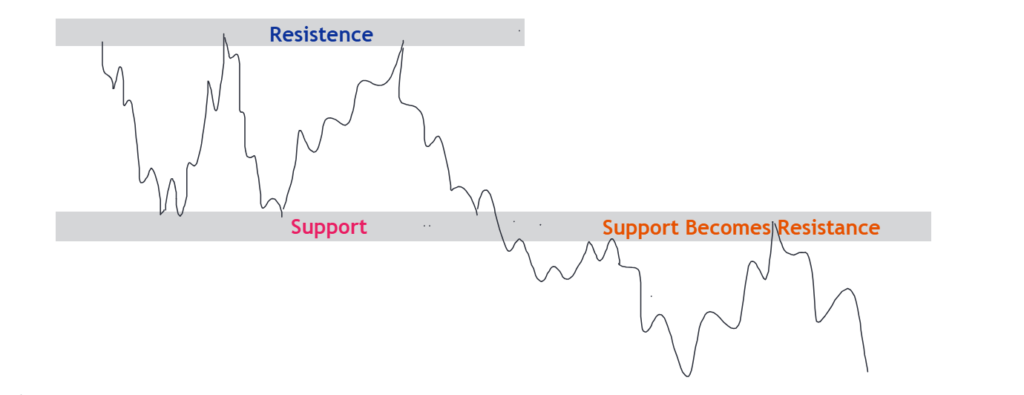
One of the most important principles in technical analysis is role reversal.
When a support level breaks, it often becomes resistance.
For example:
Price falls below support.
Sellers gain control.
Price retests the broken support.
The old support now acts as resistance.
This concept helps traders identify continuation opportunities in trending markets.
Resistance Becomes Support
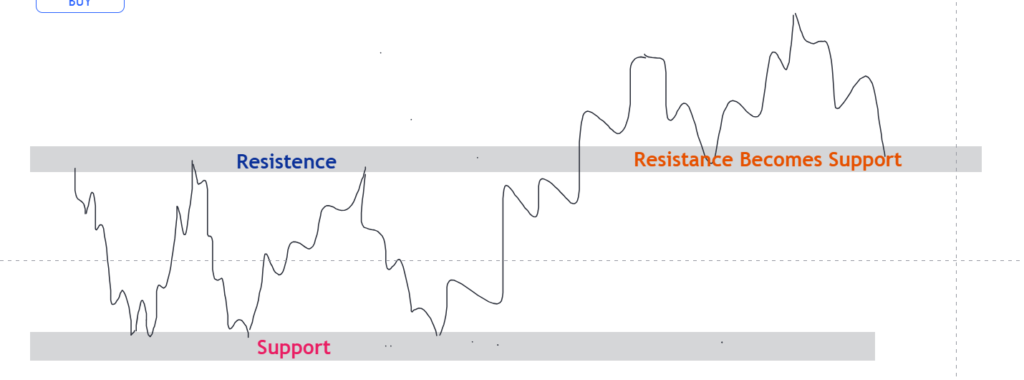
Similarly, when resistance is broken, it often turns into support.
For example:
Price breaks above resistance.
Buyers gain control.
Price revisits the breakout level.
The previous resistance now acts as support.
This behavior is common in strong bullish trends.
Support and Resistance Across Different Timeframes
5-minute chart
15-minute chart
1-hour chart
Daily chart
Weekly chart
Not all support and resistance levels are equally important.
Lower Timeframes
5-minute and 15-minute charts create many support and resistance levels. These are useful for intraday traders but often produce false signals.
Medium Timeframes
1-hour and 4-hour charts generally provide more reliable levels because they contain more market data.
Higher Timeframes
Daily and weekly support and resistance levels are considered the strongest because they reflect long-term market participation.
Multiple Timeframe Analysis
Professional traders often identify support and resistance on higher timeframes and then refine entries on lower timeframes.
For example:
The daily chart identifies major support.
The 1-hour chart provides entry confirmation.
This approach improves trade quality and reduces risk.
Common Trading Strategies
Support Bounce Strategy
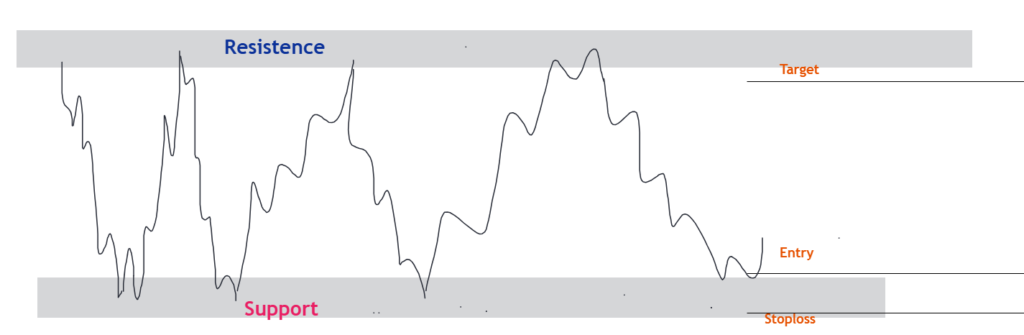
Entry:
Buy near support after confirmation.
Stop Loss:
Below support.
Target:
Next resistance level.
Resistance Rejection Strategy
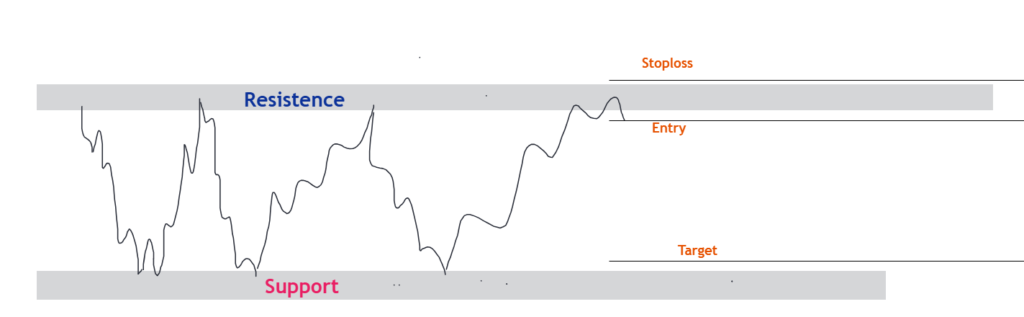
Entry:
Sell near resistance after bearish confirmation.
Stop Loss:
Above resistance.
Target:
Nearest support level.
Resistance Breakout Strategy
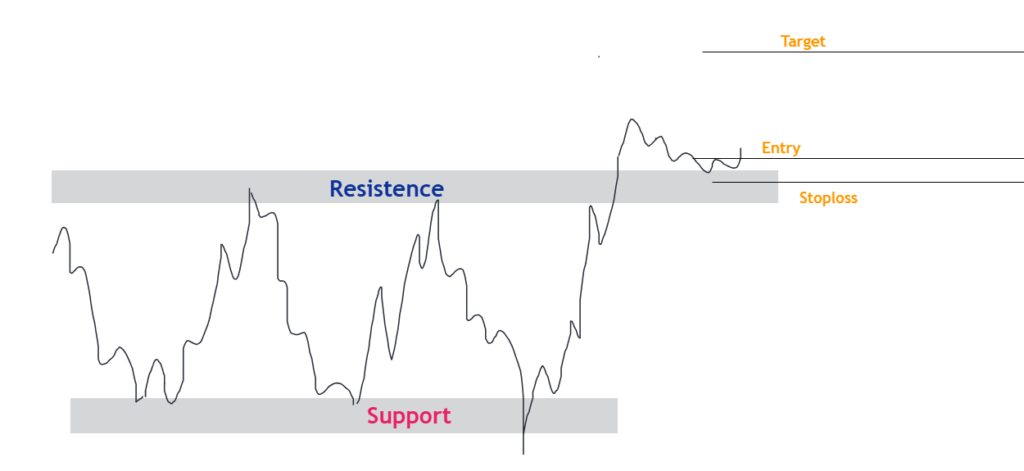
A Resistance Breakout occurs when the price moves above a key resistance level with strong momentum. This signals that buyers have gained control and may push the market higher.
Entry
Enter a buy trade after a confirmed breakout above resistance.
Wait for a strong candle close above the resistance zone.
Higher volume during the breakout increases reliability.
Stop Loss
Place the stop loss below the breakout candle.
Alternatively, place it below the previous resistance level, which may now act as support.
Target
Previous swing high.
Measured move based on the range before the breakout.
Risk-to-reward ratio of at least 1:2.
Why It Works
Breakout indicates strong buying pressure.
Trapped sellers may cover positions, adding more buying momentum.
Resistance turns into support after a successful breakout.
Pro Tips
Avoid entering on weak breakouts.
Look for volume confirmation.
Wait for a retest of the breakout level for safer entries.
Support Breakdown Strategy
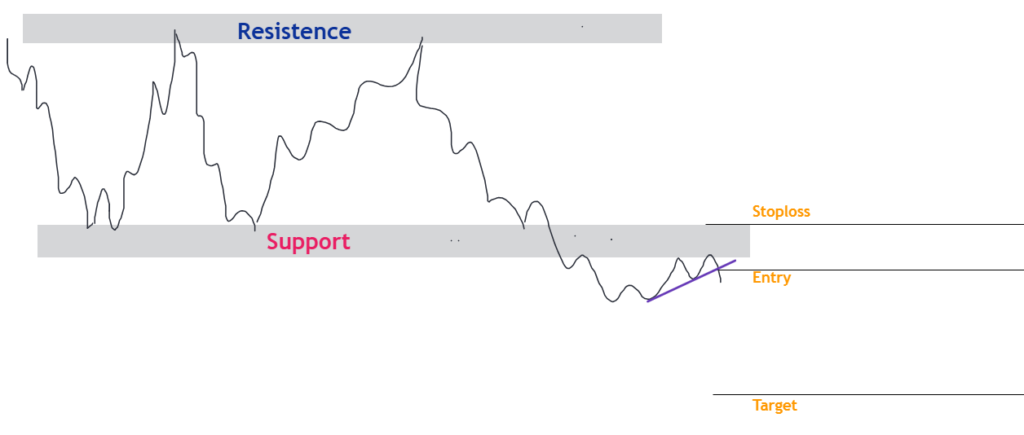
A Support Breakdown occurs when the price falls below a significant support level. This suggests that sellers have taken control, and further downside movement may follow.
Entry
Enter a sell trade after a confirmed breakdown below support.
Wait for a candle to close below the support zone.
Increased selling volume strengthens the setup.
Stop Loss
Place the stop loss above the breakdown candle.
Alternatively, place it above the broken support level.
Target
Next major support zone.
Previous swing low.
Minimum risk-to-reward ratio of 1:2.
Why It Works
The breakdown shows strong selling pressure.
Buyers trapped at support may exit their positions.
Broken support often becomes new resistance.
How Institutions Use Support and Resistance
Liquidity zones
False breakouts
Smart Money Concepts
Large institutions require significant liquidity to execute their orders.
Support and resistance zones often contain large concentrations of pending orders and stop losses, making them attractive areas for institutional activity.
Liquidity Pools
Many retail traders place stop losses below support and above resistance.
Institutions may push prices beyond these levels to trigger stops and access liquidity.
False Breakouts
A false breakout occurs when the price moves above resistance or below support but quickly reverses.
These moves often trap inexperienced traders.
Smart Money Behavior
Institutional traders frequently accumulate positions near support and distribute positions near resistance.
Understanding these concepts can help traders avoid common traps and identify higher-probability setups.
Common Mistakes Traders Make
Treating Levels as Exact Lines
Support and resistance are zones, not precise lines. Price often moves slightly above or below a level before reversing.
Ignoring Market Context
A support level in a strong downtrend may fail easily. Always consider the overall trend.
Entering Without Confirmation
Many traders buy immediately at support or sell immediately at resistance. Waiting for confirmation can improve trade quality.
Overloading Charts
Drawing too many levels creates confusion. Focus only on the most significant areas.
Real Market Example
Example:
Consider a stock trading between 100 and 120.
Step 1: Identify Resistance
Price reaches 120 several times but fails to move higher. This establishes resistance.
Step 2: Wait for Breakout
Eventually, the price closes above 120 with strong volume.
Step 3: Observe Retest
Price returns to 120 and finds support.
Step 4: Enter Trade
A trader enters near 121 after confirmation.
Step 5: Place Stop Loss
The stop loss is placed below the support zone at 118.
Step 6: Set Target
The trader targets 130 based on the previous market structure.
This example demonstrates how support and resistance can be used to plan a complete trade.
Advanced Support and Resistance Tips
Combine with Volume
Breakouts supported by high volume are generally more reliable.
Use Candlestick Confirmation
Patterns such as:
Bullish Engulfing
Hammer
Shooting Star
Bearish Engulfing
can confirm support and resistance zones.
Focus on Major Levels
Avoid cluttering charts with too many lines. Focus on levels that have produced strong reactions.
Wait for Retests
Retests often provide safer entries than chasing breakouts.
Follow Risk Management
Even strong levels fail. Proper position sizing and stop-loss placement are essential.
Best Indicators to Combine with Support and Resistance
While support and resistance are powerful tools on their own, combining them with technical indicators can improve accuracy and provide stronger trade confirmations.
Relative Strength Index (RSI)
The Relative Strength Index (RSI) measures market momentum and helps identify overbought and oversold conditions.
For example, if price approaches a major support level while RSI indicates oversold conditions, the probability of a bullish reversal may increase.
Similarly, if the price reaches resistance while the RSI enters the overbought zone, traders may look for potential selling opportunities.
Volume Analysis
Volume is one of the most effective confirmation tools for support and resistance trading.
A breakout above resistance accompanied by strong volume suggests genuine buying interest and increases the likelihood of continuation.
Likewise, a breakdown below support with heavy volume often confirms strong selling pressure.
Moving Averages
Moving averages can provide dynamic support and resistance levels while also helping traders identify the overall trend direction.
When a horizontal support level aligns with a major moving average, such as the 50-day or 200-day moving average, the level often becomes more significant.
MACD
The Moving Average Convergence Divergence (MACD) indicator helps traders identify momentum shifts and trend changes.
Bullish MACD crossovers near support levels may strengthen buying signals, while bearish crossovers near resistance levels can strengthen selling signals.
Candlestick Patterns
Candlestick patterns provide valuable confirmation at key support and resistance zones.
Popular bullish patterns include:
Hammer
Bullish Engulfing
Morning Star
Popular bearish patterns include:
Shooting Star
Bearish Engulfing
Evening Star
When these patterns appear near important support or resistance levels, they can provide additional confidence in a trading setup.
By combining support and resistance with indicators such as RSI, volume, moving averages, MACD, and candlestick patterns, traders can improve trade selection and reduce the likelihood of false signals.
Support and Resistance in Different Market Conditions
Support and resistance levels behave differently depending on the current market environment. Understanding how these levels react in trending, ranging, and volatile markets can help traders avoid false signals and improve decision-making.
Support and Resistance in Trending Markets
In a strong uptrend, support levels tend to hold more effectively because buyers remain in control of the market. Traders often look for pullbacks toward support levels to enter long positions at favorable prices.
Similarly, in a strong downtrend, resistance levels become more significant. Sellers often use rallies toward resistance as opportunities to enter short positions or exit long positions.
One important principle to remember is that trading in the direction of the trend generally offers higher-probability setups than trading against it.
Support and Resistance in Range-Bound Markets
A range-bound market occurs when the price moves between a clearly defined support and resistance zone without establishing a strong trend.
In these conditions, traders often buy near support and sell near resistance. Since the market lacks a strong directional bias, support and resistance become especially important for identifying potential reversal areas.
However, traders should remain cautious because range-bound markets can eventually transition into trending markets through breakouts or breakdowns.
Support and Resistance in Volatile Markets
Volatile markets are characterized by large price swings and increased uncertainty. During periods of high volatility, support and resistance levels may experience temporary breaches before the price returns within the range.
This is why traders should view support and resistance as zones rather than exact lines. Wider stop losses and additional confirmation signals may be necessary when trading in highly volatile market conditions.
Understanding the market environment helps traders apply support and resistance more effectively and avoid common mistakes caused by changing market conditions.
For additional learning about technical analysis concepts, readers can explore educational resources available on Investopedia.
Final Thoughts
Support and resistance form the foundation of technical analysis. They help traders understand where buyers and sellers are likely to become active and provide a framework for planning trades with greater confidence.
However, no level guarantees a reversal or breakout. The most successful traders combine support and resistance with proper risk management, market structure analysis, and price action confirmation.
By consistently practicing and applying these concepts in real market conditions, traders can develop a more disciplined and structured approach to trading.
Key Takeaways
Support is an area where buying pressure increases.
Resistance is an area where selling pressure increases.
Support can become resistance after a breakdown.
Resistance can become support after a breakout.
Higher timeframe levels are generally stronger.
Volume confirmation improves reliability.
Institutions often use support and resistance to locate liquidity.
Risk management remains essential in every trade.
TradingView link – https://www.tradingview.com/
Frequently Asked Questions (FAQ)
1. What is a Resistance Breakout?
A resistance breakout occurs when the price moves above a key resistance level, indicating strong buying pressure and the potential start of an upward trend.
2. What is a Support Breakdown?
A support breakdown happens when the price falls below a significant support level, signaling increased selling pressure and possible further downside movement.
3. How do I confirm a breakout or breakdown?
Wait for a candle to close above resistance or below support. Volume confirmation can help validate the move.
4. Why is volume important during breakouts?
Higher trading volume shows stronger participation from market participants, making the breakout or breakdown more reliable.
5. Where should I place my stop loss in a resistance breakout trade?
A stop loss is commonly placed below the breakout candle or below the previous resistance level that has turned into support.
6. Where should I place my stop loss in a support breakdown trade?
A stop loss is typically placed above the breakdown candle or above the broken support level that may act as resistance.
7. What are false breakouts and false breakdowns?
These occur when the price briefly moves beyond a support or resistance level but quickly reverses, trapping traders who entered too early.
8. Can beginners use breakout trading strategies?
Yes. Resistance breakout and support breakdown strategies are beginner-friendly when combined with proper risk management and confirmation techniques.
9. Which timeframe works best for breakout trading?
Breakouts can be traded on any timeframe, but 15-minute, 1-hour, and daily charts generally provide more reliable signals than very short timeframes.
10. What is the biggest mistake traders make when trading breakouts?
The most common mistake is entering before confirmation, which often leads to getting trapped in false breakouts or false breakdowns. Waiting for candle close and volume confirmation can reduce this risk.